
Selective Dismantling
Why it’s becoming the new standard in circular construction
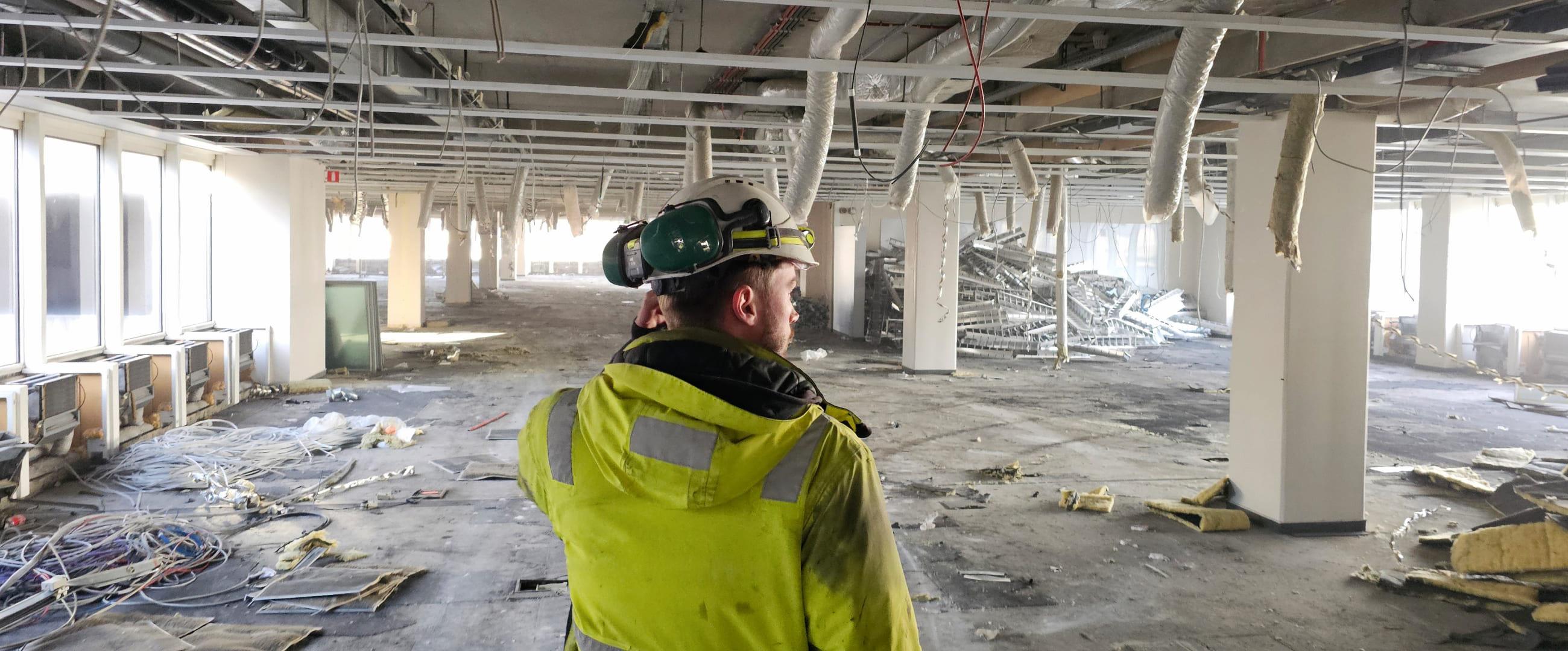
What if the most sustainable building material is already standing right in front of us?
Across Europe, the construction sector is quietly but fundamentally changing. Demolition is making way for selective dismantling, also known as selective demolition or deconstruction. Buildings are no longer treated as waste at the end of their life, but as temporary material banks full of valuable resources.
This shift is driven by stricter regulations, material scarcity and a growing focus on circular construction. And on site, it is driven by contractors who choose to do things differently. Together with Aclagro, Resulation explores what selective dismantling really means in practice, why it matters, and what needs to change for it to become the new normal.
What is selective dismantling and how is it different from demolition?
Selective dismantling is a systematic, planned approach to taking buildings apart, with one clear goal: preserving the value of materials.
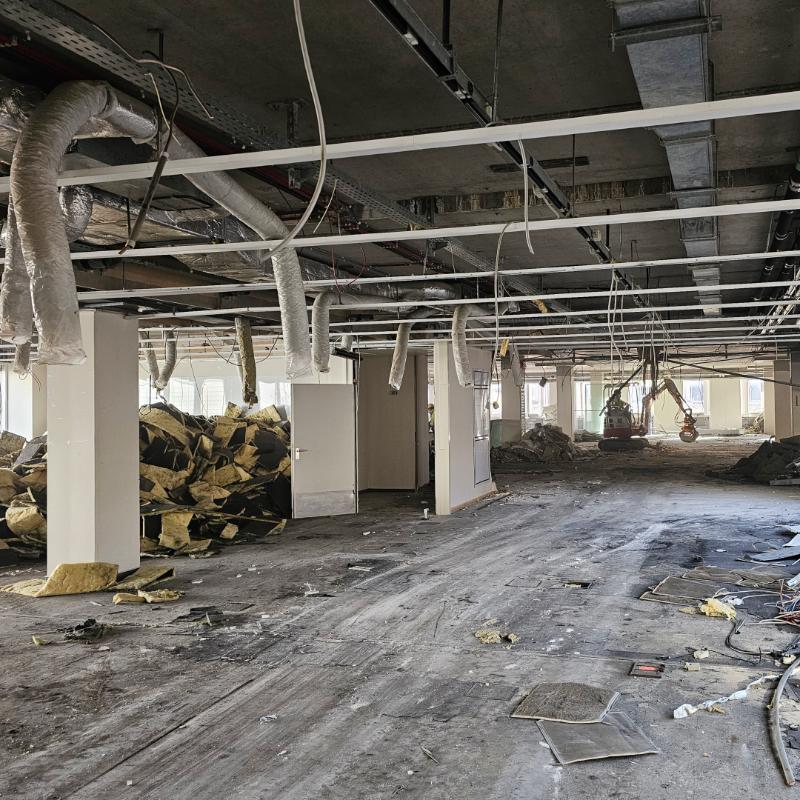
Instead of demolishing a structure in one go and sending mixed construction waste to landfill, selective dismantling focuses on:
- Separating materials at the source
- Recovering high-value streams such as metals, wood and insulation
- Enabling reuse or high-quality recycling
- Reducing waste, emissions and raw material extraction
In other words, selective dismantling is demolition with a strategy. Or as Aclagro describes it, acting as the architect of deconstruction, not just the executor.
When do you choose selective dismantling instead of classic demolition?
For Aclagro, the answer is simple: always, unless proven impossible.
Selective dismantling is their default approach on every project. The reason is twofold:
- Ecologically, it drastically reduces waste and environmental impact.
- Economically, it often pays off through recovered material value and future-proof compliance with regulations.
That said, selective dismantling is not a one-size-fits-all formula. Each site is assessed individually:
- How much time is available?
- Which materials are present?
- What level of separation is feasible on site?
Selective dismantling requires more upfront effort, but that investment often pays back later through better material recovery, lower disposal costs and access to circular value chains.
Key decision factors on site
In practice, several factors determine how far selective dismantling can go on a project.
Material value
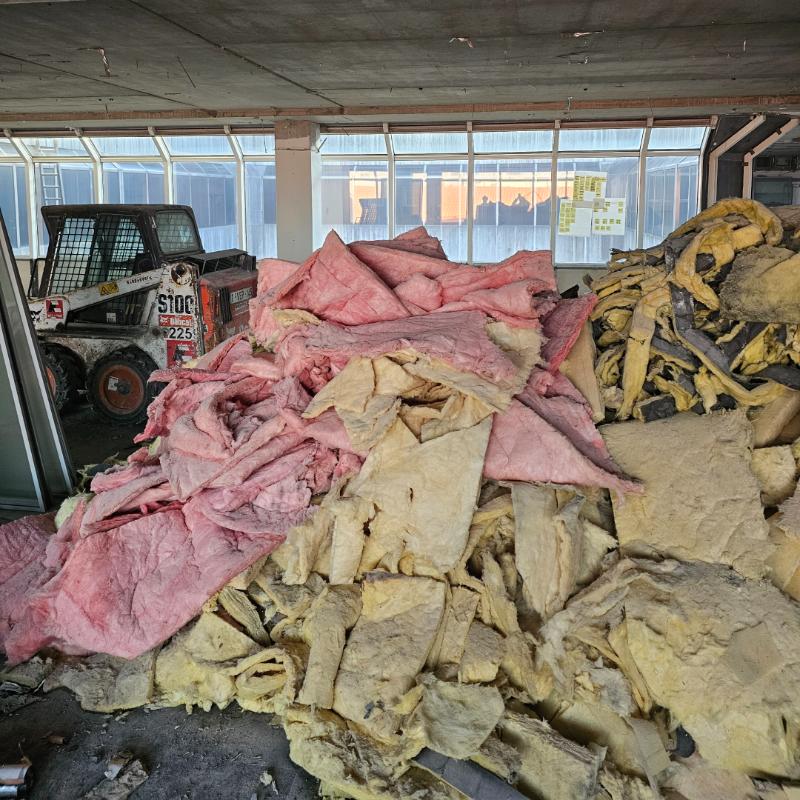
Aclagro closely analyses which materials will be released and what can realistically be reused or recycled. Some streams, such as metals or mineral wool, have strong and growing demand. Others are more challenging due to limited outlets.
Logistics and space
Selective dismantling requires space for containers and temporary storage. On compact urban sites, this can limit how many material streams can be separated simultaneously.
Manual labour
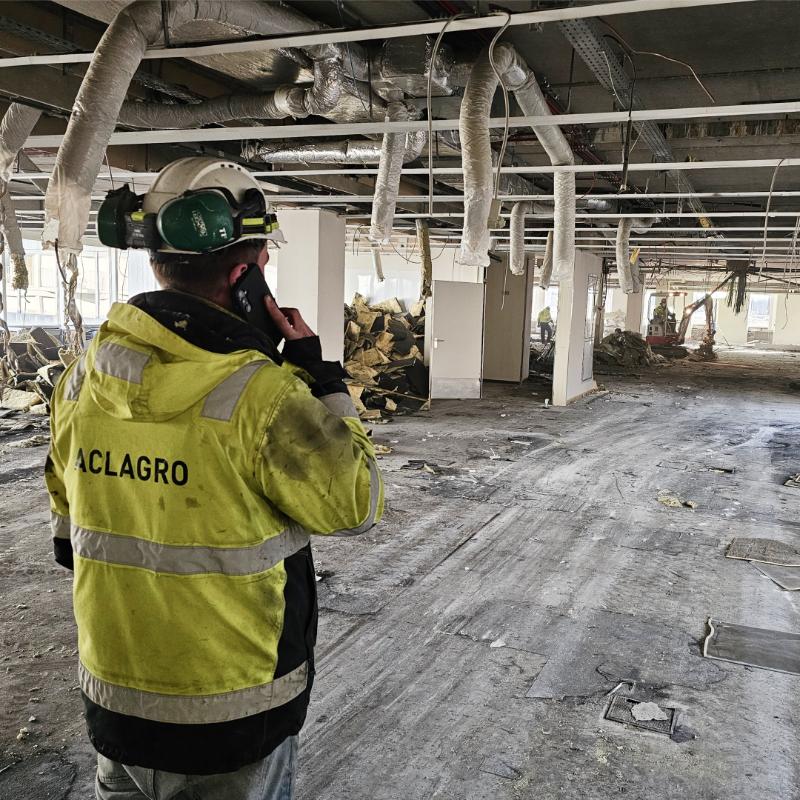
Unlike classic demolition, selective dismantling relies heavily on skilled manual work. Machines help, but precision and separation often require human hands.


Why selective dismantling is still not the norm
Despite its benefits, selective dismantling is not yet standard practice. According to Aclagro, the main barriers are clear.
First, it is not yet a legal obligation. Without mandatory requirements, decisions are often made ad hoc on site, balancing time, cost and feasibility.
Second, labour intensity remains a challenge. More manual work means more time, and time pressure is still a dominant factor in many projects.
Third, limited reuse and recycling outlets slow things down. For some materials, quality standards, certification requirements or missing markets make high-value recovery difficult.
What needs to change to make selective dismantling the standard?
The transition will not happen by goodwill alone.
Aclagro is convinced that regulation is key. Clear, enforceable rules on selective dismantling would level the playing field and accelerate adoption across the sector.
At the same time, stronger recycling and recovery ecosystems are essential. When reliable outlets exist, selective dismantling becomes not just the sustainable choice, but the logical one.
This is where collaboration comes in. On site, Aclagro works closely with partners like Resulation to ensure materials such as glass mineral wool are correctly identified, separated and prepared for recycling.
Which materials are best suited for high-quality recovery today?
Some materials already prove that circular construction works in practice.
Metals
Steel and other metal streams are almost entirely recyclable and often sortable directly on site. They remain one of the strongest pillars of selective dismantling.
Wood
Solid wood elements can be reused for furniture or flooring. When reuse is not possible, recycling into fibreboards remains a valuable option.
Mineral wool
Glass mineral wool, when properly separated, can be recycled into new insulation without quality loss. Through Resulation, this stream stays material, instead of becoming waste.
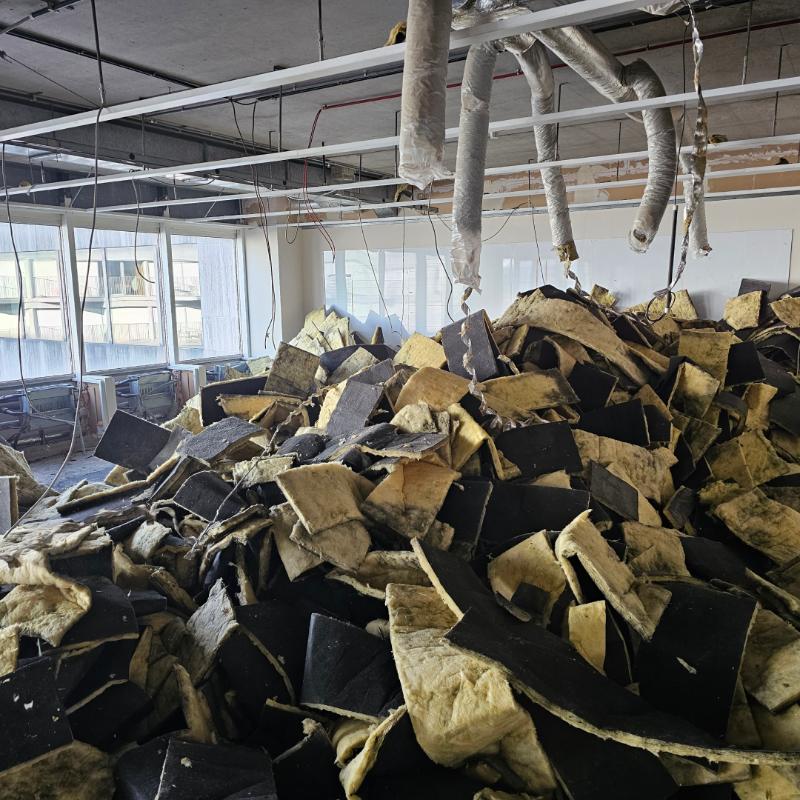
Selective dismantling in Europe: from best practice to baseline
According to Aclagro, Europe is already moving towards a form of obligation.
Public authorities increasingly demand selective dismantling, especially in large or complex projects. Sustainability frameworks such as BREEAM explicitly reward material reuse and circular dismantling strategies.
At the same time, raw materials are becoming scarcer, while demand continues to rise. Manufacturers are investing heavily in recycling technologies to secure future supply. Selective dismantling is no longer a niche. It is becoming infrastructure.
Why collaboration matters more than ever
Selective dismantling only works when the entire chain is aligned.
On site, Aclagro ensures materials are carefully separated and preserved. Downstream, Resulation turns recovered mineral wool into an infinitely reusable raw material, backed by the expertise of Knauf Insulation.
It is a practical partnership built on shared know-how, not theory. One that proves circular construction starts long before new buildings go up.
From demolition to deconstruction
Selective dismantling is not about doing less damage. It is about creating more value.
As regulations tighten and circular construction becomes the standard, the question is no longer if selective dismantling will be required, but how prepared the sector is to implement it at scale.
Curious how selective dismantling and mineral wool recycling can work on your next project? Follow Resulation on LinkedIn and keep the circle moving.